
What Is a 30-60-90 Day Plan and Why Is It Important?
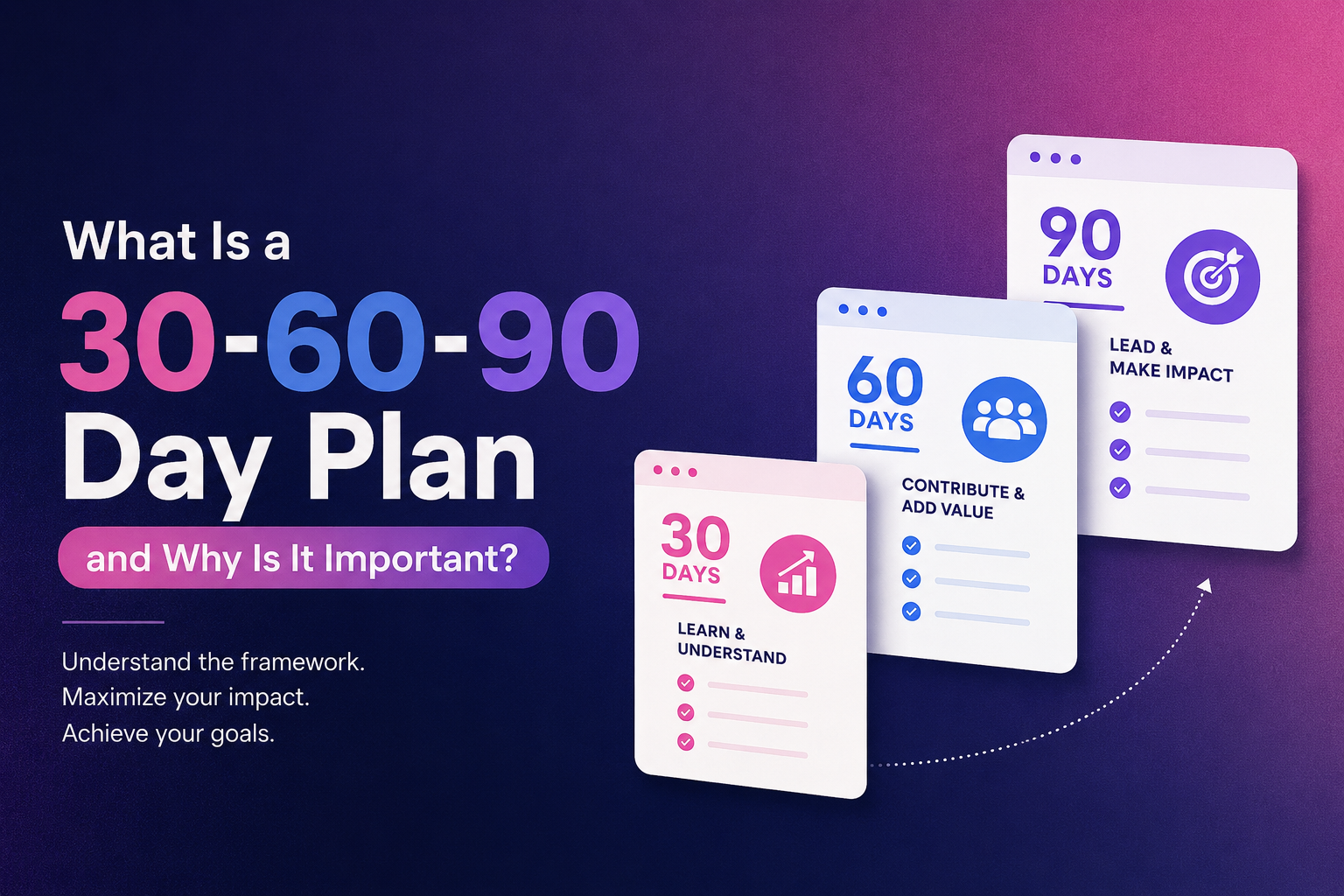


Starting something new, whether it is a job, a project, or a personal goal, often comes with a simple question: where do I even begin? A 30-60-90 day plan is one of the easiest ways to answer that question. It breaks down the first three months into three clear stages, so you always know what you should be focusing on.
In this blog, we will explain what a 30-60-90 day plan is, why it matters, and how it is often presented visually.
What Is a 30-60-90 Day Plan?
A 30-60-90 day plan is a simple framework that divides the first three months of a new role, project, or goal into three 30 day stages. Each stage has its own focus, building on the one before it.
- First 30 Days: Learning, observing, and getting familiar with the role, team, or task at hand.
- Next 30 Days (Day 60): Starting to apply what you have learned, taking on small responsibilities, and building momentum.
- Final 30 Days (Day 90): Working more independently, delivering results, and showing measurable progress.
The plan can be as simple as a short list of goals for each stage, or it can be more detailed, with specific tasks, metrics, and milestones attached to each period.
Why Is a 30-60-90 Day Plan Important?
A 30-60-90 day plan is useful because it turns a vague goal like “do well in this new role” into something specific and manageable. Here is why it matters.
1. It Sets Realistic Expectations You cannot expect to perform at full speed on day one. A 30-60-90 plan acknowledges this by setting different expectations for each stage, starting with learning and gradually moving toward independent results.
2. It Provides Structure From Day One Instead of figuring things out as you go, a 30-60-90 plan gives you a roadmap from the very start. This is especially helpful for new employees, who often feel uncertain about priorities in their first few weeks.
3. It Helps with Communication Sharing a 30-60-90 plan with a manager, team, or stakeholder makes expectations clear on both sides. Everyone knows what success looks like at each stage, which reduces confusion later on.
4. It Tracks Progress Over Time Because the plan is broken into stages, it is easy to check in at the 30, 60, and 90 day marks and see whether things are on track. If adjustments are needed, they can be made early instead of waiting until the end.
5. It Applies Beyond Work While a 30-60-90 plan is most common in job onboarding and sales roles, the same idea works for personal goals too, such as starting a fitness routine, learning a new skill, or launching a side project.
Who Uses a 30-60-90 Day Plan?
This framework shows up in a wide range of situations.
- New employees use it to outline their goals during onboarding, often sharing it with their manager in the first week.
- Job candidates sometimes present a 30-60-90 plan during interviews to show they have already thought about how they would approach the role.
- Sales teams use it to map out how a new rep will ramp up, from learning the product to closing deals on their own.
- Project managers use a similar structure to break a project into setup, execution, and review phases.
- Managers and team leads use it to set expectations for new initiatives or team changes.
How Is a 30-60-90 Day Plan Usually Presented?
When it is time to share a 30-60-90 plan, whether in a meeting, an interview, or an onboarding document, a visual layout often makes it easier to follow than plain text. Two common formats are used.
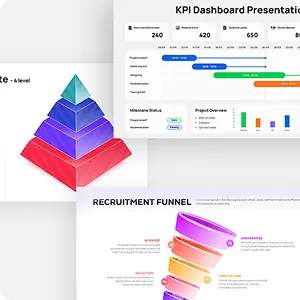
Triangle Layout A triangle shape is a popular way to represent the three stages. Since a triangle naturally has three points or sides, each one can represent a stage, with the shape growing or stacking to show progress over time. This works well for quick, high level summaries.
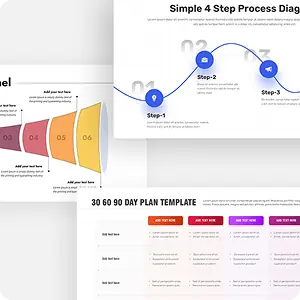
Table Layout For plans that involve more detail, such as sales onboarding, a column based table is often used instead. Each column represents one of the three stages, with a list of tasks or goals underneath, making it easier to track several items at once.
If you are putting together your own 30-60-90 presentation, you do not have to start from a blank page. SlidesDepot has a collection of 30-60-90 templates designed for exactly this kind of plan, ready to use in PowerPoint or Google Slides. Here are three options from that collection.
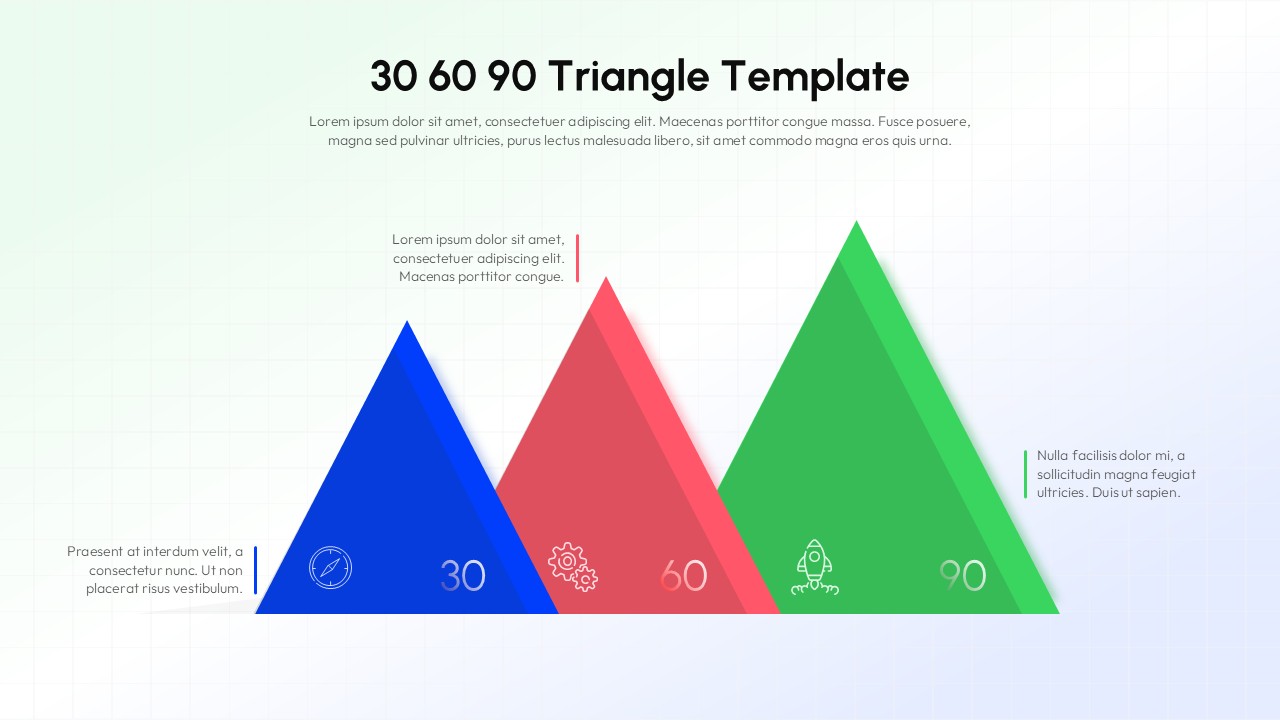
30-60-90 Triangle PowerPoint and Google Slides Template A clean three triangle layout, with each triangle representing one of the three stages and space for a short description next to each one.
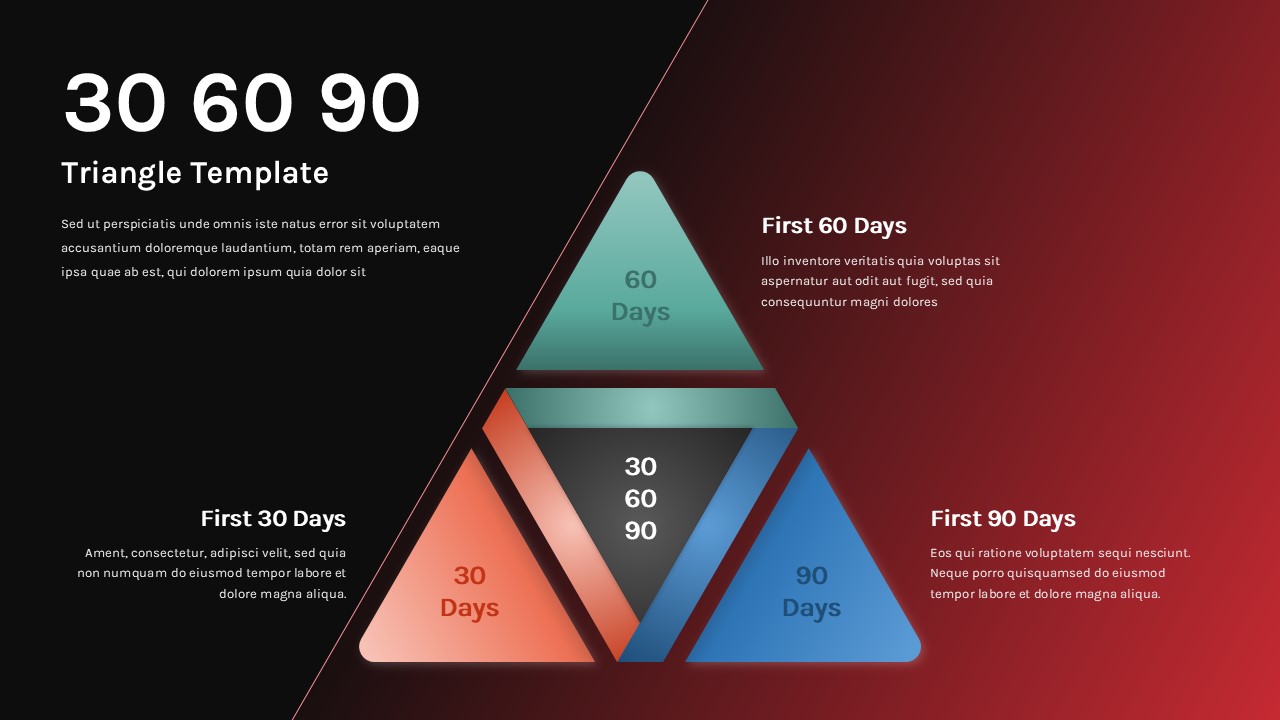
30-60-90 Triangle PowerPoint and Google Slides An ascending skyline style layout, with three triangles of increasing height, each paired with an icon and a short note.
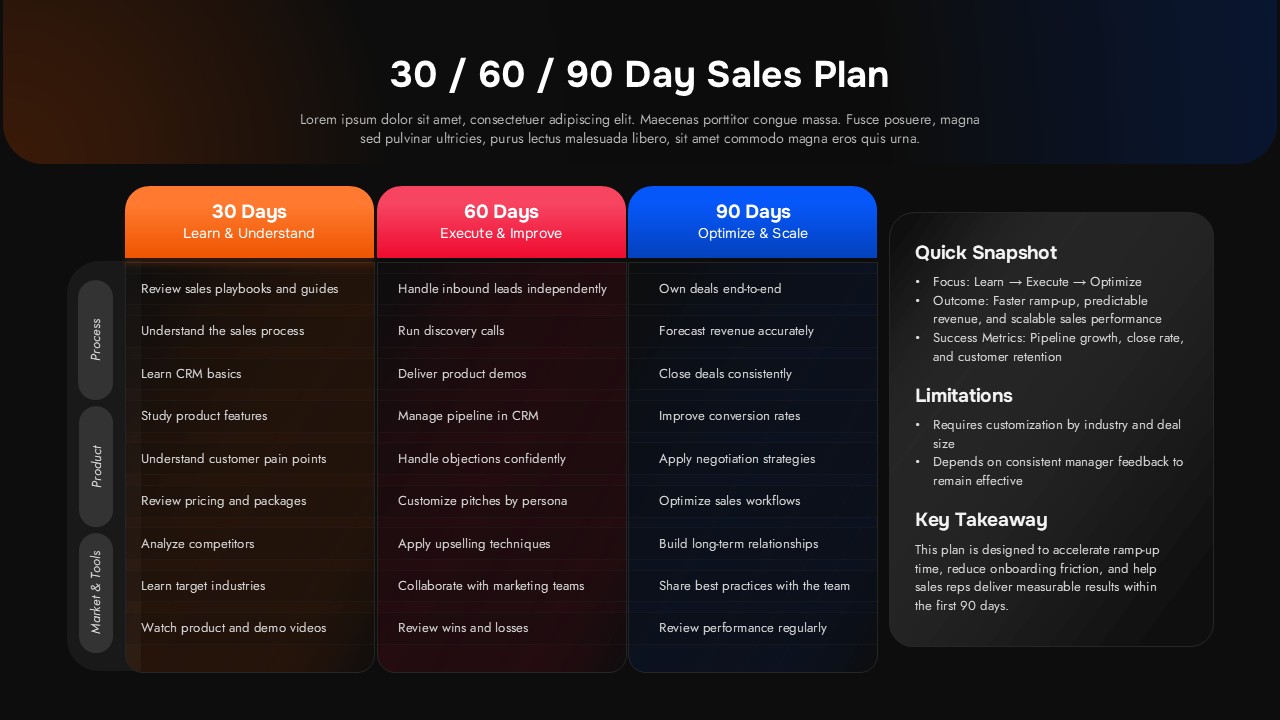
30-60-90 Sales Roadmap PowerPoint and Google Slides A column based table layout, with three color coded phases, grouped task lists, and a summary panel for more detailed plans.
Final Thoughts
A 30-60-90 day plan is a simple but effective way to bring structure to the first three months of anything new. By breaking goals into three manageable stages, it sets realistic expectations, improves communication, and makes it easier to track progress along the way. Whether you are starting a new job, leading a project, or working toward a personal goal, taking a few minutes to map out your first 30, 60, and 90 days can make a big difference in how that period unfolds.


How to Make a Good Google Slides Presentation Quickly and Effectively
Smart Hacks to Make Your Google Slides Presentations Better Creating a presentation in Google Slides doesn’t have to be overwhelming or time-consuming. With the right approach, clear structure, and smart slide design, you can build a professional presentation that communicates your message clearly and keeps your audience engaged. This guide explains how to make a…
How to Make Google Slides Vertical (Portrait Mode) – Step-by-Step Guide
Google Slides is one of the most popular presentation tools in the world, but it has one quirk that trips up a lot of users: it defaults to landscape (horizontal) mode. If you’ve ever tried to create a poster, resume, infographic, social media graphic, or flyer in Google Slides and felt frustrated by the horizontal layout, you’re not alone. The…

How to Make Google Slides Look Good: 18 Tips for an Aesthetically Pleasing Presentation
Most people open Google Slides, pick a random theme, and start typing. The result is a deck that looks like every other presentation in the room: mismatched fonts, crowded slides, and a colour palette that nobody consciously chose. Then they wonder why the audience checks their phones. Knowing How to Make Google Slides Look Good…