
Best Meeting Minutes Templates to Keep Meetings Organized and Actionable
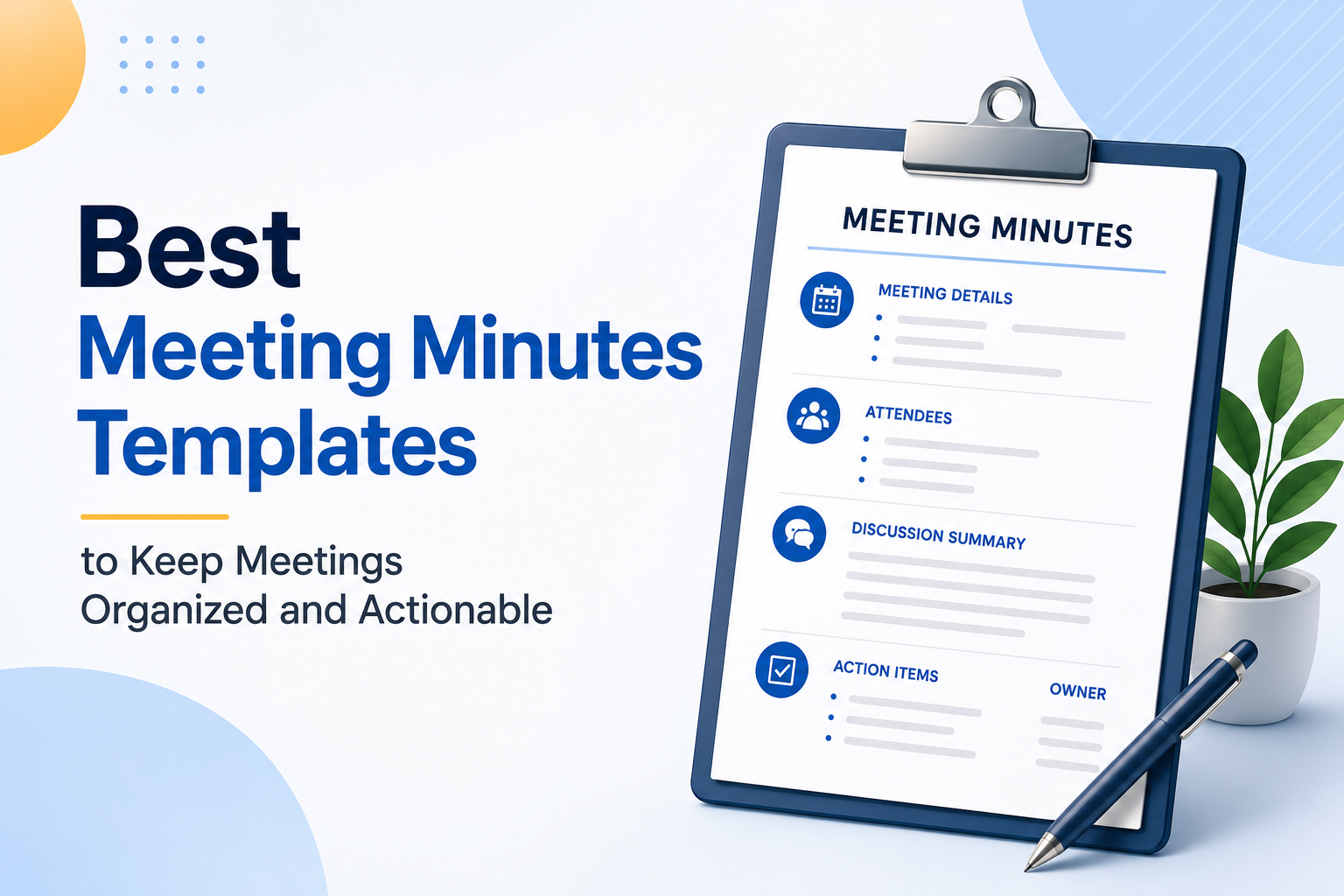


Most teams have sat through a meeting that felt productive in the moment, only to realize a week later that nobody can remember what was actually decided, or who was supposed to do what. The meeting itself wasn’t the problem. The way it was documented was. Good meeting minutes are what turn a conversation into a record the team can act on, and that record only works if it’s written well and easy to revisit.
SlidesDepot built a set of ready-to-use meeting minutes templates for exactly this reason: so teams can spend their energy on running a good meeting instead of formatting the notes afterward. Before we get to the templates, it helps to understand why minutes matter so much, what good ones actually look like, and where most teams go wrong when writing them.
Why Meeting Minutes Matter
Meeting minutes are often treated as an afterthought, something a junior team member jots down and nobody reads again. That’s a missed opportunity, because well-kept minutes do real work for a team.
They keep everyone accountable. When a decision is paired with a named owner and a date, it’s much harder for a task to quietly slip through the cracks. Minutes turn “we should probably do that” into a commitment someone is on record for.
They protect against miscommunication. People walk out of the same meeting with different memories of what was agreed. A written record settles disagreements before they turn into wasted work or repeated conversations.
They keep absent team members in the loop. Anyone who missed the meeting, whether on leave, in another time zone, or simply double-booked, can catch up in a few minutes instead of pulling someone aside to recap an hour-long discussion.
They build institutional memory. Projects change hands, people leave roles, and priorities shift. A clean archive of past minutes means new team members or stakeholders can understand how a decision was reached months later, not just what the decision was.
They create an audit trail. For board meetings, compliance reviews, vendor negotiations, or any formal process, documented minutes can serve as an official record if a decision or timeline is ever questioned later.
They make follow-up genuinely easier. A clear, organized list of action items turns vague intentions into a checklist that’s easy to track in the next meeting, instead of everyone trying to reconstruct what was supposed to happen.
How to Prepare Good Meeting Minutes
Writing strong minutes isn’t about capturing every sentence spoken in the room. It’s about discipline before, during, and after the meeting, and a clear sense of what’s actually worth writing down.
Start with your format ready before the meeting begins. Don’t try to design a layout while people are talking. Open a template in advance with sections already in place for the date, attendees, agenda items, decisions, and action items, so you’re filling in blanks instead of building structure on the fly.
During the meeting, capture outcomes, not transcripts. You don’t need to record every comment or tangent. Focus on what was decided, who’s responsible for it, and what the deadline is. If a topic was discussed but no decision was reached, note that too, so it doesn’t get lost or quietly dropped.
Use plain, specific language. Avoid vague phrasing like “team will follow up” or “discussed budget.” Write “Priya to send the revised budget to finance by Friday” instead. Specificity is what makes minutes actionable rather than just descriptive.
Clean up and circulate minutes quickly. Memory fades fast, both yours and the room’s. Tidy your notes within a few hours of the meeting while the context is still fresh, then send them to everyone who attended or needed to be there. Waiting days to send minutes out drains most of their usefulness.
Tie every action item to a name and a date, no exceptions. An action item without an owner or a deadline is just a suggestion floating in space. If something needs to happen, someone needs to own it and a date needs to be attached to it.
Review old minutes before the next meeting starts. A short check on outstanding action items at the top of each new meeting keeps people accountable and stops half-finished tasks from quietly disappearing between sessions.
Keep a consistent structure across meetings. Using the same format every time, whether it’s a daily stand-up or a quarterly review, makes minutes easier to scan, easier to compare over time, and easier for new team members to read without explanation.
Common Mistakes That Make Minutes Useless
Even well-intentioned note-takers fall into a few habits that quietly undermine the whole point of keeping minutes.
Writing too much detail buries the useful information under pages nobody wants to read. Writing too little leaves out the context needed to understand a decision later. Sending minutes out late, days after the meeting, means people have already moved on and the record loses its relevance. And skipping action item owners is the most common mistake of all, since a task with no clear owner almost never gets done.
Templates to Make It Easier
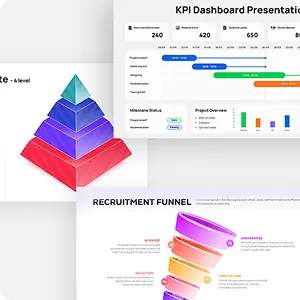
Once you know what good minutes look like, the fastest way to produce them consistently is to start from a layout that’s already built for the job, rather than recreating one from scratch every time. Here are four from SlidesDepot worth keeping on hand, each suited to a different kind of meeting.
Morning Meeting Template
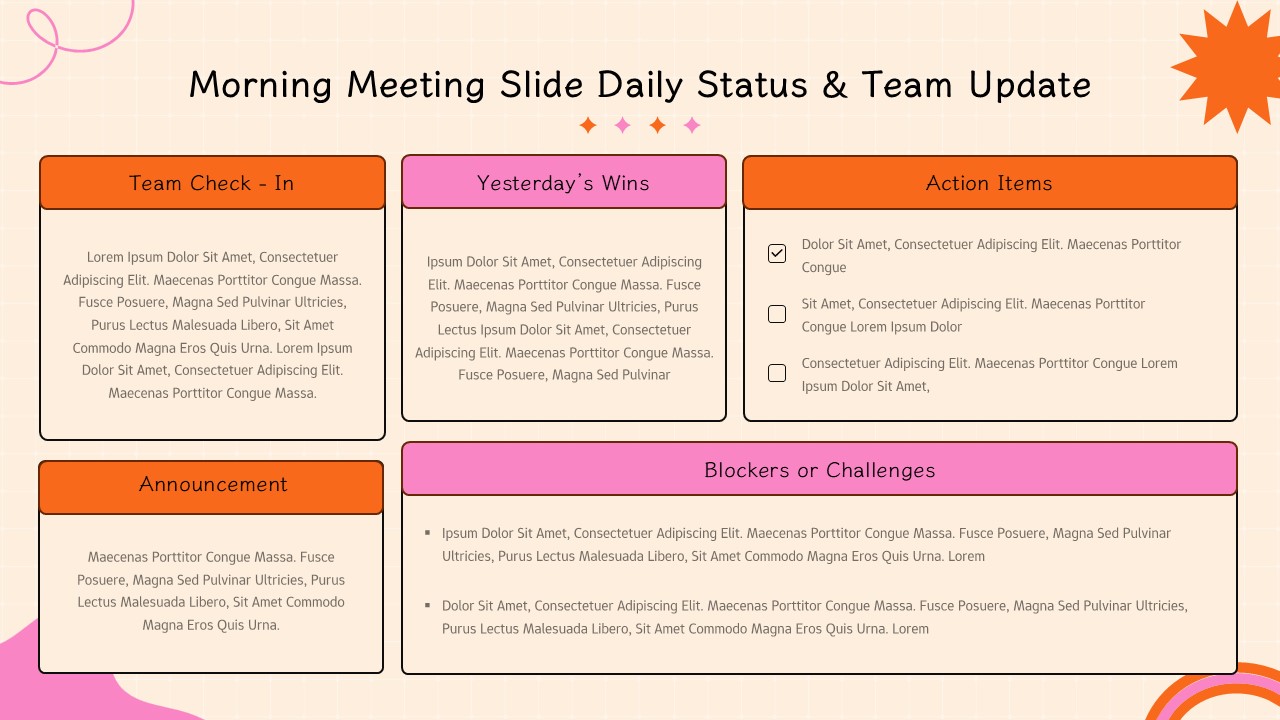
A quick, visual layout built for daily stand-ups and morning huddles, where the goal is speed and clarity rather than detailed documentation. Ideal for project teams, ops groups, or anyone running a fast daily check-in.
Business Meeting Summary Layout
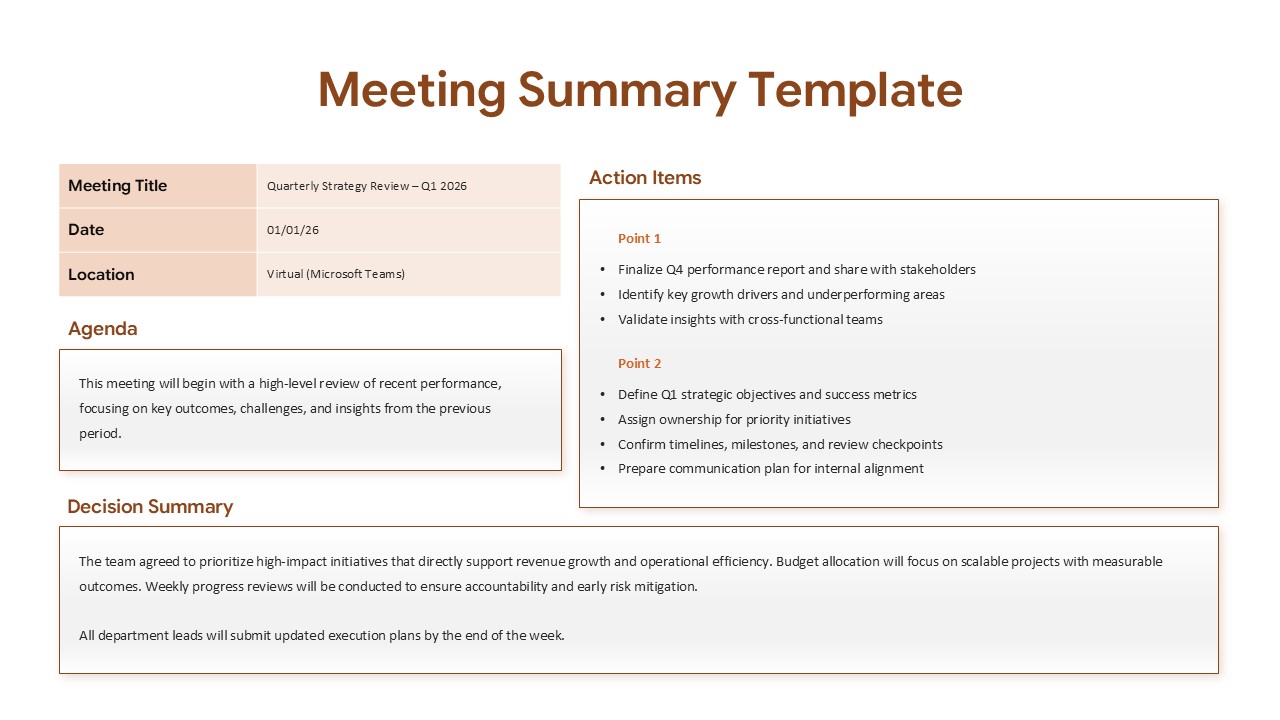
A concise, executive-friendly format for circulating the headline version of a meeting without forcing busy stakeholders to read a full write-up. Useful after client calls, leadership syncs, or cross-team meetings where a fast recap matters more than a full record.
Meeting Minutes Documentation Layout
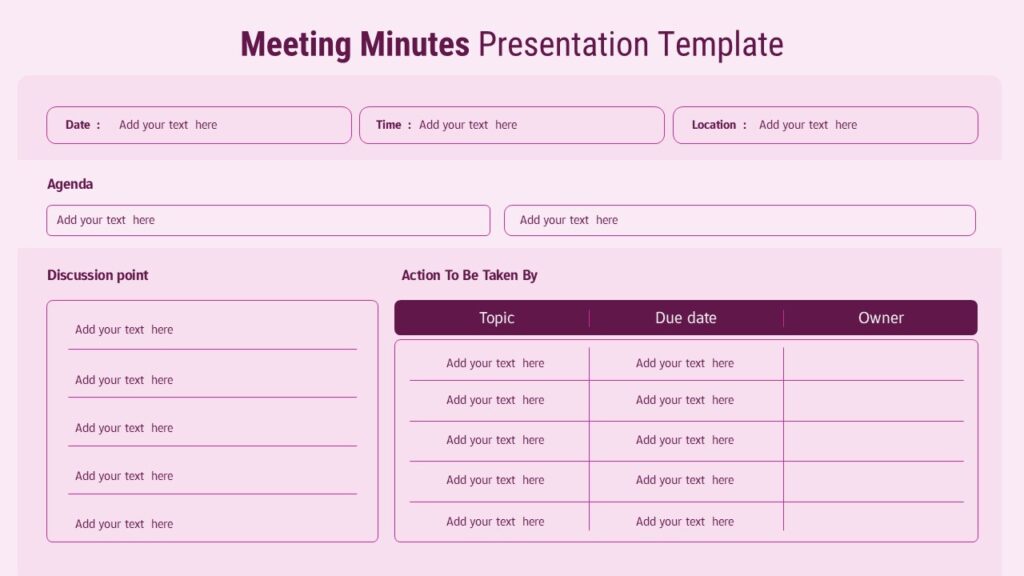
A more thorough structure for board sessions, compliance reviews, and formal project governance, where the minutes need to function as an official record. Well suited to HR, legal, and compliance teams.
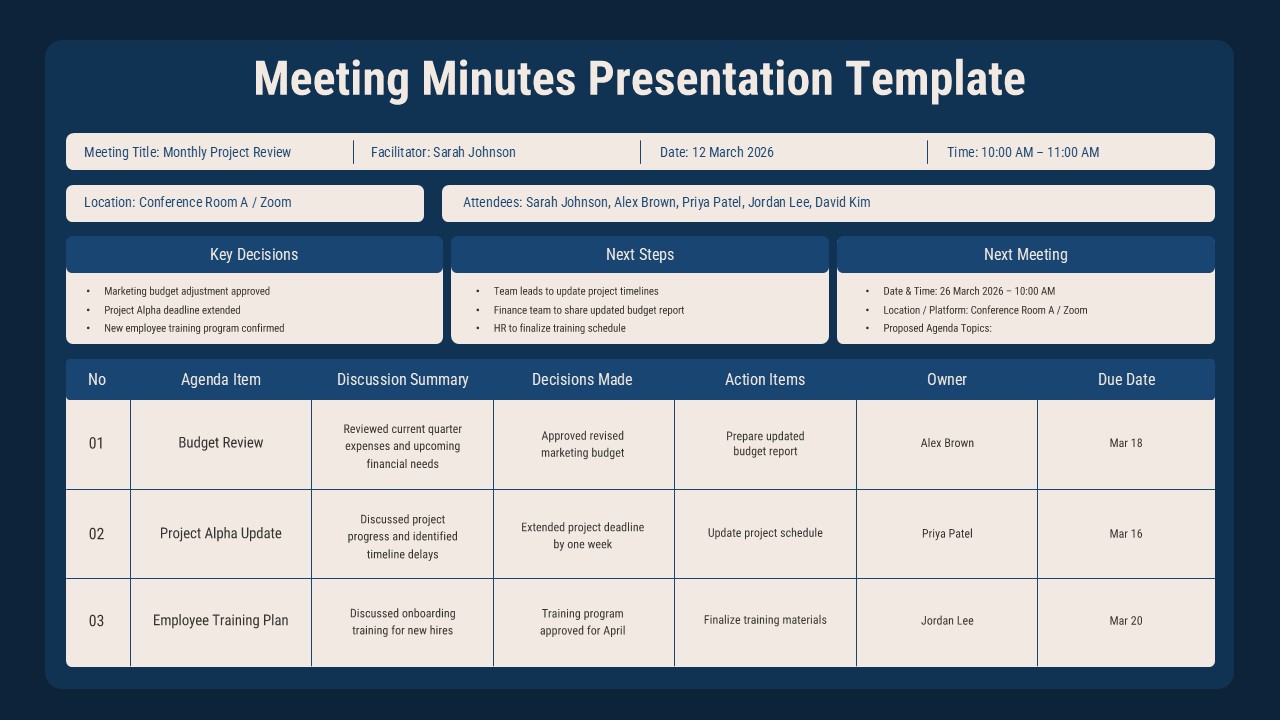
A flexible, all-purpose layout covering agenda items, discussion notes, decisions, and action items for everyday team meetings. A solid default when you want one reliable format for most situations.
All four are fully editable in PowerPoint and Google Slides, so you can drop in your own branding, adjust the sections to fit your meeting style, and reuse the same format every time instead of rebuilding one from a blank slide.
The Takeaway
Great meeting minutes aren’t about writing more, they’re about writing the right things clearly and following through on them. Capture decisions instead of conversation, tie every action item to a name and a date, and send the notes out while they’re still fresh. Pair that habit with a template that’s already organized for you, and your meetings start producing real progress instead of notes nobody ever reopens. Browse SlidesDepot’s full collection to find the layout that fits your next meeting, and turn your minutes into something your team actually uses.


What Is a Slide Deck? Meaning, Examples & Ready-Made PPT Templates
In many professional, academic, and business settings, ideas are often shared through visual presentations. Whether you’re pitching a startup idea to investors, teaching students in a classroom, or presenting quarterly results to your team, a slide deck plays a central role in how your message is delivered and understood. But what exactly is a slide…

How to Use and Insert Plus Minus Symbol (±) in PowerPoint & Google Slides
How to Insert the Plus Minus Symbol (±) in PowerPoint & Google Slides You’re almost done with your slide deck. The charts look sharp, the layout is clean and then you realize you need the plus minus symbol (±). You scan your keyboard. It’s not there. So you start digging through menus, losing momentum, wondering…

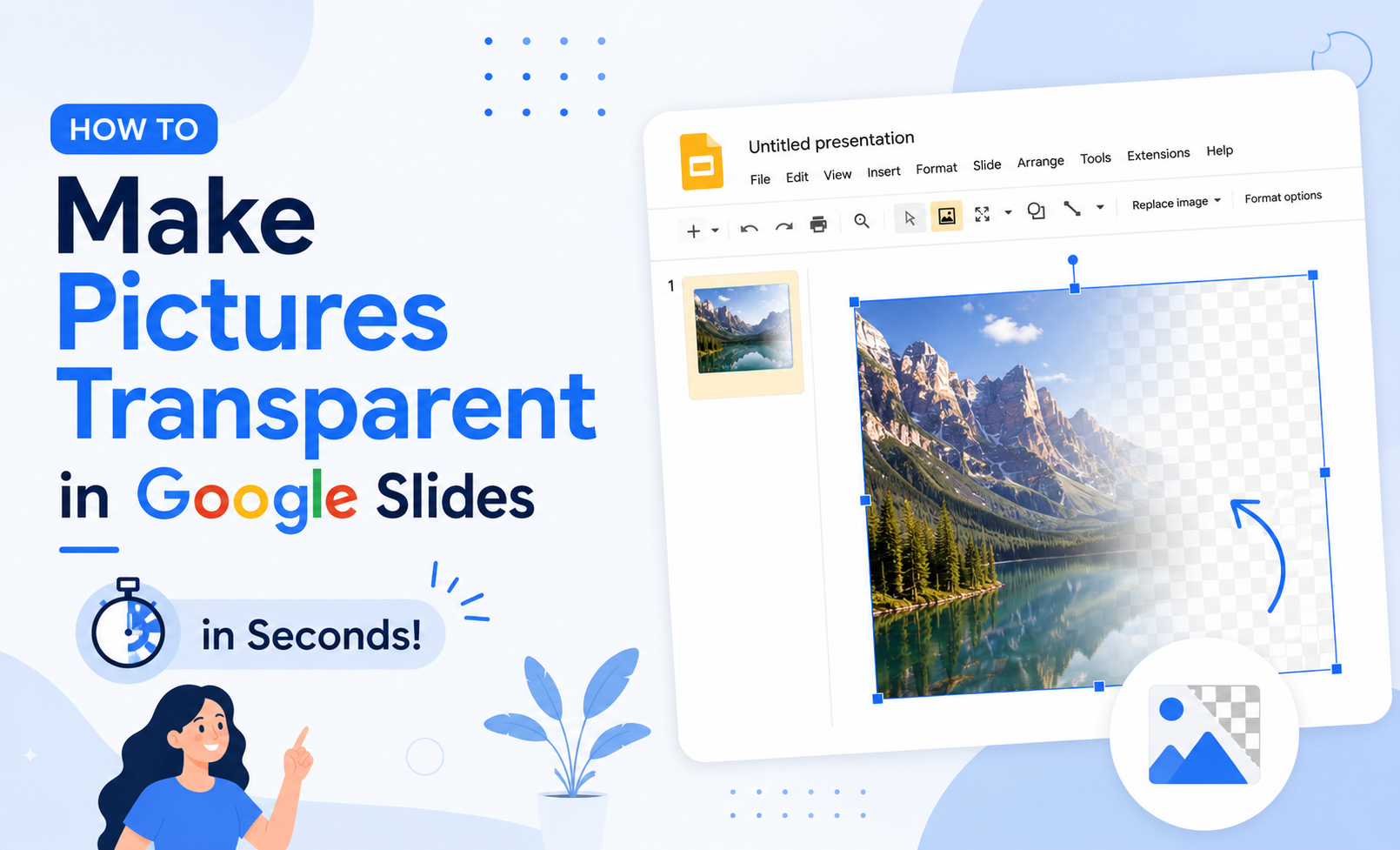
How to Make Pictures Transparent in Google Slides in Seconds
Knowing how to make an image transparent in Google Slides is one of those small skills that quietly upgrades every presentation you build. You don’t need Photoshop. You don’t need a third-party tool. The control is built right into Google Slides and it just takes a moment to find it. This guide walks you through…