Why Understanding Your Target Audience Matters
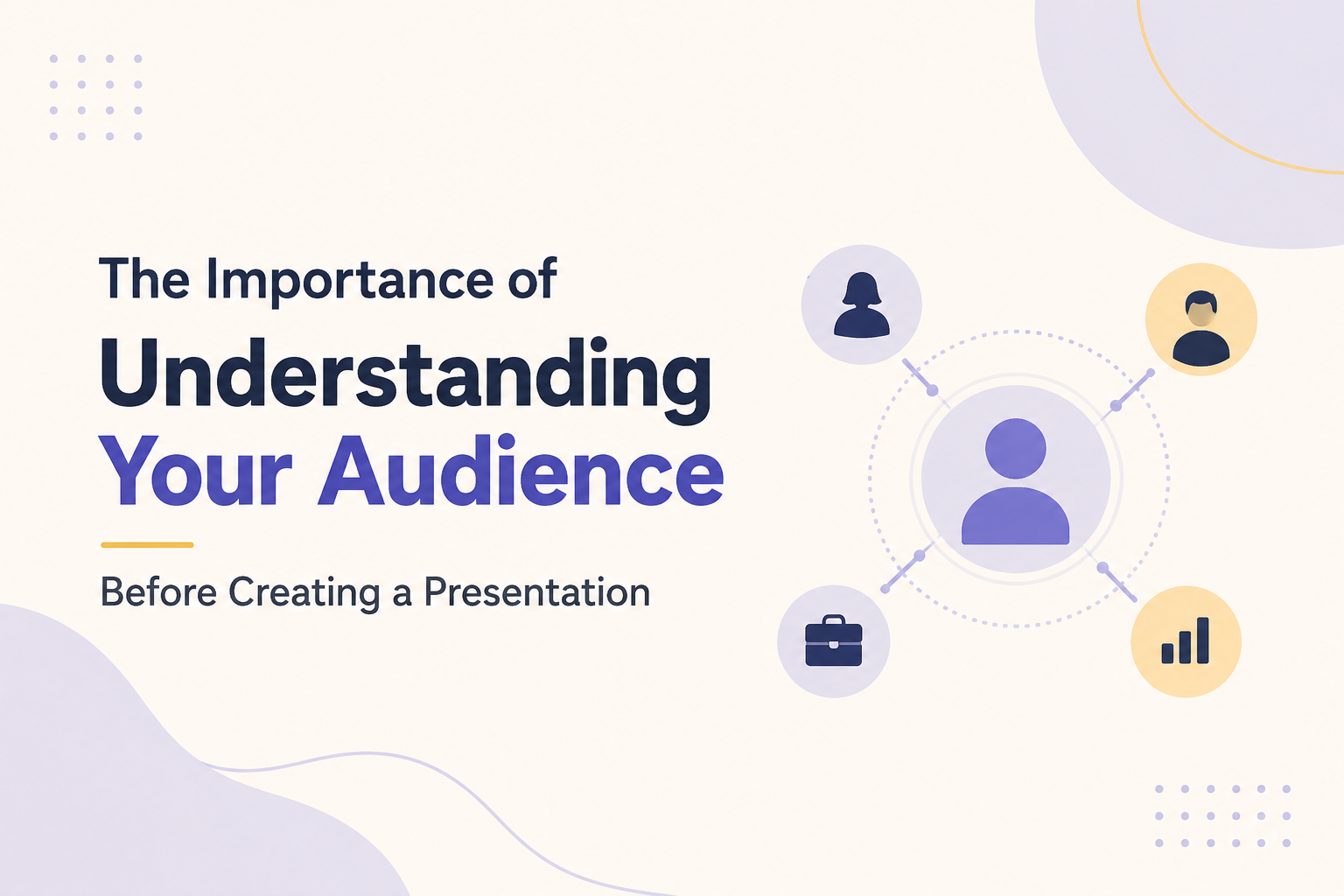


Picture this. You spend hours building a presentation. The slides look clean. The data is solid. You feel ready. Then you walk into the room and something is immediately off. The audience looks confused. Some look bored. A few are already on their phones. What went wrong? You had great content but built it for the wrong people. This is one of the most common presentation mistakes out there, and it is completely avoidable. Before you choose a template, before you pick a color scheme, before you write a single bullet point, you need to answer one question: Who is my audience?
What Is a Target Audience in a Presentation?
Your target audience is the specific group of people you are presenting to. Not just “everyone in the room,” but a clearly defined group with shared goals, backgrounds, knowledge levels, and expectations. It is the difference between broadcasting and actually communicating. When you present to everyone in general, you tend to connect with no one in particular. When you have a specific group in mind, the content feels personal, relevant, and worth paying attention to.
Your target audience shapes everything. It determines the words you choose, the depth you go into, the tone you carry, and even how your slides look. A room of engineers needs a completely different presentation than a room of investors, even if the underlying topic is identical. The data might be the same. The story around it has to be different.
Why It Matters More Than Most Presenters Think
Most people treat audience awareness as a nice-to-have. It is not. Skipping this step does not just make your presentation less polished. It actively works against you.
Better engagement. When people feel a presentation was built for them, they pay attention. They lean in, ask questions, and stay present. The moment your audience feels like you are speaking past them rather than to them, you lose them, and it is very hard to get them back.
Clearer communication. Knowing your audience helps you cut the noise and focus only on what this specific group needs to hear. That focus makes your message sharper, your structure tighter, and your key points far easier to remember.
Stronger results. Whether your goal is to close a deal, get a project approved, or teach a concept, you are far more likely to achieve it when the room feels like you are speaking directly to them. People act on what resonates personally, not on what is technically accurate in the abstract.
Less wasted time. When you know your audience, you stop over-explaining things they already know and stop rushing past things they need more context on. The presentation runs at the right pace and everyone walks away feeling the time was well spent.
How to Analyze Your Audience Before You Build Anything
You do not need to run a survey or hire a researcher. You need to ask yourself five honest questions before you open any presentation software.
Who will be in the room? Start with job titles, industry, seniority, and general experience level. Did they choose to attend, or were they assigned? People who show up by choice are already more engaged, and that affects how you open.
What is their knowledge level on this topic? This single question changes your entire structure. Experts want depth and nuance. They do not need foundational explanations and will lose patience quickly if you give them one. Beginners need clear definitions, relatable analogies, and a pace that lets them build understanding as you go.
What do they want to walk away with? Some want to make a decision. Some want to learn a skill. Some just want a quick update and to get back to work. When your content directly serves their goal, the presentation feels worthwhile. When it does not, even the most polished slides feel like a waste of their time.
What are their expectations for this setting? A formal boardroom presentation and a casual lunch-and-learn call for completely different approaches, even with the same content. Matching those expectations, or thoughtfully breaking them when you have a reason to, makes a real difference in how your presentation lands.
Where might they push back? Every audience has at least one point of skepticism. Thinking through potential objections in advance lets you address them before they become distractions and shows your audience that you understand their world well enough to anticipate their concerns.
Common Audience Types and What They Need
Not all audiences are the same, and knowing the type you are facing shapes every decision you make.
Executives and decision-makers want the bottom line fast. They do not need every detail. They need enough to make a confident call. Lead with your conclusion, keep the data tight, and be ready for direct questions. Respecting their time is itself part of the presentation.
Students and learners are there to absorb something new. They need clear structure, relatable examples, and a pace that lets them follow along. If you are not genuinely interested in what you are teaching, it shows within the first two minutes.
Clients and customers care primarily about what is in it for them. They are not there to hear about your internal process. They want to know how this solves their problem and delivers results they care about. Lead with outcomes, not features.
Investors are evaluating you as much as your idea. They want to see that you understand the market, that your numbers add up, and that your plan is realistic. Be specific, back everything with data, and know your figures cold. A shaky answer to a financial question can undo an otherwise strong pitch.
Internal teams already have the context, so skip re-explaining the background. What they need is clarity on decisions being made, alignment on direction, and a compelling reason to get behind what you are proposing.
What Happens When You Get It Wrong
Real consequences follow when you skip audience analysis. A founder pitches to retail customers using developer jargon and API documentation. The customers nod politely, leave confused, and nobody buys. A salesperson explains foundational concepts to engineers who mastered them a decade ago. The engineers stop listening in the first five minutes and never fully return. A playful, cartoon-filled template shows up in a serious investor meeting. Before a single word is spoken, the room has already decided the presenter did not take them seriously. High energy and humor land in a room that wanted calm and professional. The gap between what was delivered and what was needed is felt immediately.
None of these are content problems. The information might be accurate, well-researched, and genuinely useful. They are all audience mismatch problems, and every single one is avoidable with a little upfront thinking.
How Audience Shapes Design and Template Choice
Design communicates before you say a word. The moment your slides appear, your audience is already forming an impression. A cluttered layout signals disorganization. A clean, spacious design signals confidence. Bright colors feel out of place in a corporate boardroom. Dense text kills energy in a creative workshop. Font choices, white space, and data visualization style all send signals about how well you understand the room.
Your template choice is part of that same message. At SlideDepot, we built our library of presentation templates with exactly this in mind, because the right template for one audience is the wrong one for another.
| Audience | Best Template Style |
| Corporate / Investors | Clean, minimal, professional |
| Students / Educators | Bright, visual, easy to follow |
| Creative Teams | Bold, modern, design-forward |
| Healthcare / Nonprofits | Trustworthy, calm, data-friendly |
| Sales Pitches | High-energy, benefit-focused |
The right template does not just look good. It makes your audience feel like the presentation was made specifically for them. Because it was.
The Bottom Line
A great presentation is not just well-designed slides with solid data. It is a message crafted for a specific group of people and delivered in a way that genuinely resonates with them. Start with the audience. Let that shape your structure, your language, your examples, your design, and your template choice. When your audience feels like you truly understood them before you started, they will trust everything you say after. Browse SlideDepot’s full collection of presentation templates to find the perfect fit for your next talk.


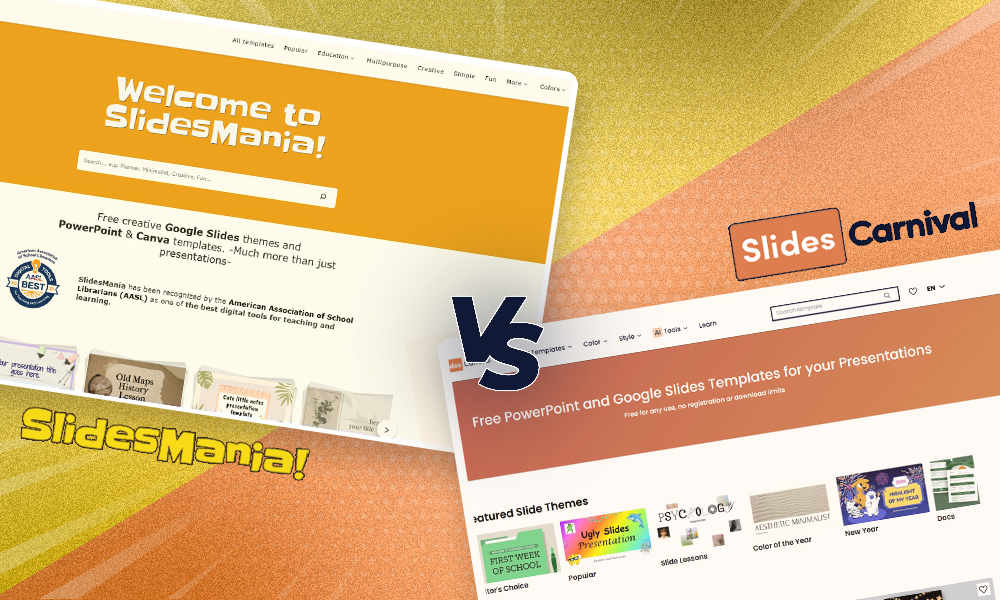
SlidesCarnival vs SlidesMania: A Complete Guide to Choosing the Best Google Slides Templates for Your Needs
When searching for high-quality Google Slides templates, two platforms consistently stand out: SlidesCarnival and SlidesMania. Both offer free, well-designed presentation themes. Both are widely used. But they serve different audiences and presentation goals. Instead of asking which platform is better, This guide will help you understand their strengths, differences, and ideal use cases so you can confidently choose the option…

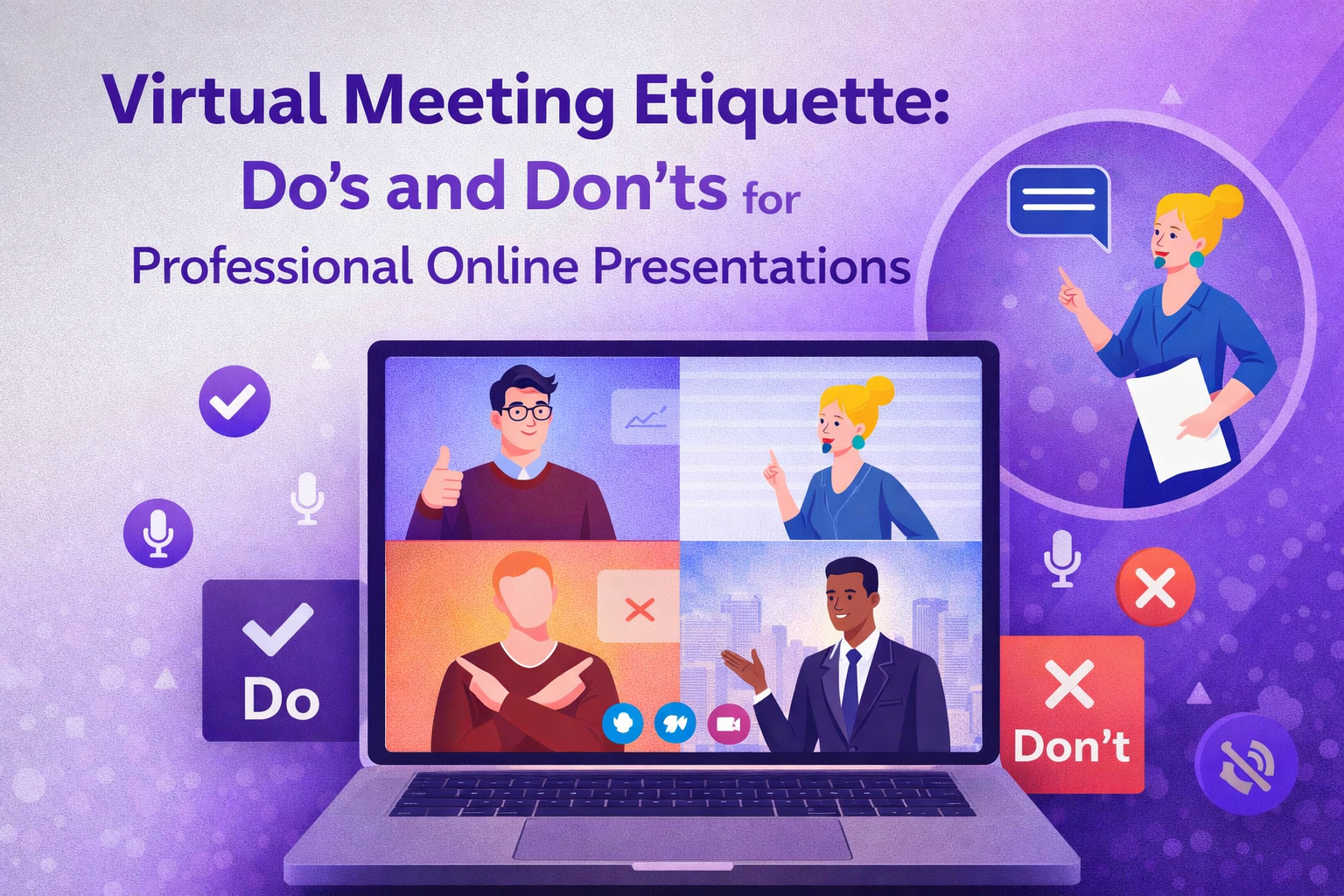
Virtual Meeting Etiquette: Do’s and Don’ts for Professional Online Presentations
virtual meeting etiquette are now a daily professional reality. Whether you are presenting a quarterly report, pitching a new client, or leading a team training session, how you show up online shapes how others perceive your competence and credibility. Most people focus entirely on what they will say. They give almost no thought to how…
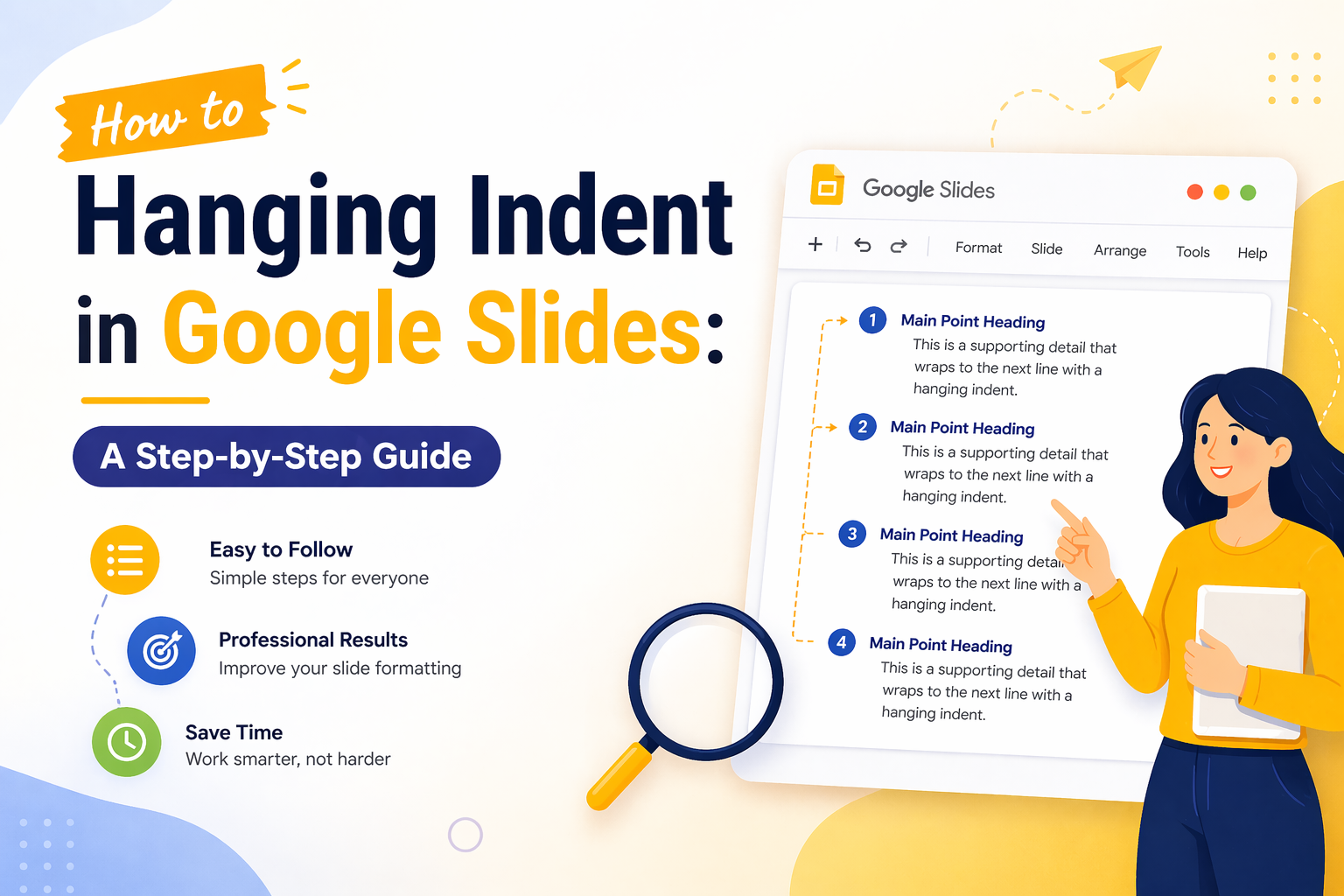
Hanging Indent in Google Slides: A Step-by-Step Guide
You have spent hours building a polished presentation. Your content is solid, your visuals are clean, and then you get to your references or bibliography slide and everything looks off. The text wraps awkwardly, lines run together, and the whole slide feels unfinished. This is one of the most common formatting frustrations in Google Slides,…