
Sales Deck vs Pitch Deck: What’s the Difference? A SlidesDepot Guide
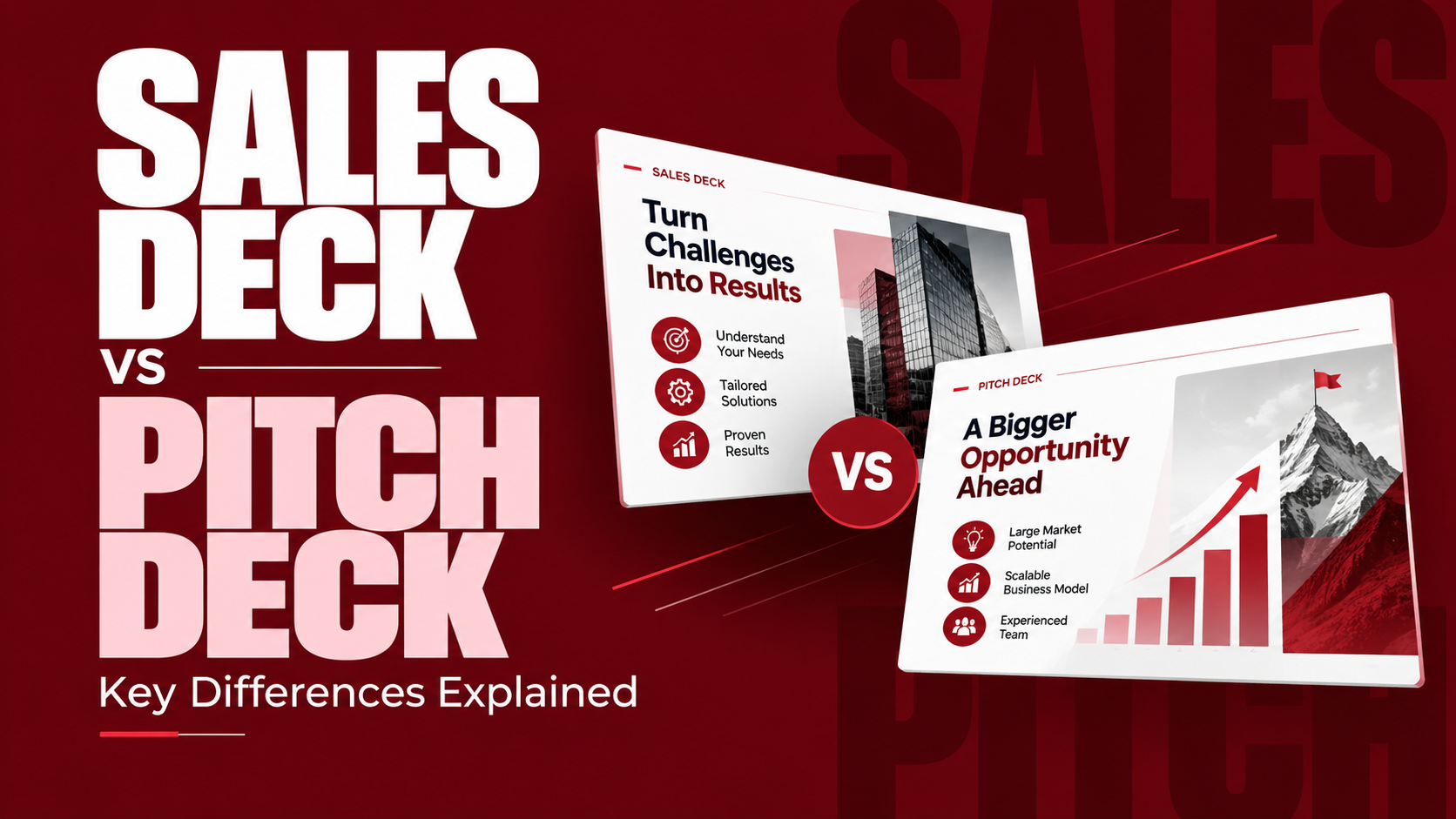


Many people use “sales deck” and “pitch deck” interchangeably. Both are slide presentations, both try to persuade, and both usually end with a request. But when you compare a sales deck vs pitch deck side by side, they serve different audiences, answer different questions, and lead to very different outcomes. Using the wrong one can cost you a deal or a funding round. In this SlidesDepot guide, we break down what each deck is, how they differ, what slides belong in each, and how to choose the right format for your next presentation.
What Is a Sales Deck?
A sales deck is a presentation used to convince a potential customer to buy a product or service. It is built around the buyer’s problem and shows how your solution solves it better than the alternatives.
The audience is a prospect, a buying committee, or an existing client you want to upsell. They care about outcomes such as saved time, lower costs, higher revenue, and reduced risk. They are not interested in your company’s valuation or long-term market strategy. They want to know whether your offer works for them.
A strong sales deck is customer-centric. It speaks the prospect’s language, uses case studies and proof points, handles objections before they come up, and ends with a clear next step such as a demo, a trial, or a signed proposal.
What Is a Pitch Deck?
A pitch deck is a presentation used to convince investors to fund a business. Startups use pitch decks to raise pre-seed, seed, and venture capital rounds, and established companies use them when seeking strategic partners or new financing.
The audience is investors, including angel investors, venture capitalists, accelerators, and sometimes banks or grant committees. They are asking a different question from a buyer: will this business grow large enough to return my money many times over?
Because of that, a pitch deck focuses on the size of the opportunity, the business model, traction, the team, competition, financial projections, and the funding ask. The product matters, but mostly as evidence that the company can capture a large market.
Sales Deck vs Pitch Deck: Key Differences at a Glance
| Factor | Sales Deck | Pitch Deck |
| Primary audience | Prospects and customers | Investors and partners |
| Main goal | Close a deal or move a buyer forward | Secure funding or investment |
| Core question answered | “How does this solve my problem?” | “Why will this business succeed and scale?” |
| Focus | Customer pain points and outcomes | Market size, business model, and growth |
| Proof used | Case studies, testimonials, ROI data | Traction, revenue, user growth, team credentials |
| Financial content | Pricing and return on investment for the buyer | Projections, unit economics, funding ask |
| Tone | Empathetic and solution-focused | Visionary yet data-driven |
| Typical length | 10 to 20 slides, often customized per prospect | 10 to 15 slides, tightly edited |
| Call to action | Book a demo, start a trial, sign a contract | Schedule a follow-up, commit to the round |
The Sales Deck vs Pitch Deck Difference Explained in Detail
Audience and Mindset
A buyer is solving a problem today. An investor is betting on a future outcome. That single difference shapes everything else. A sales deck should make the buyer feel understood, while a pitch deck should make the investor feel confident about the size and likelihood of the return.
Purpose and Outcome
The purpose of a sales deck is to shorten the path to a purchase decision. The purpose of a pitch deck is to earn enough trust for a second meeting and, eventually, a check. Sales decks are often part of a repeatable sales process, while pitch decks are used during a specific fundraising window.
Storyline
Sales decks usually follow a problem, solution, proof, and action storyline. The hero of the story is the customer. Pitch decks follow a problem, opportunity, solution, traction, and ask storyline. The hero of the story is the company and its team.
Data and Metrics
In a sales deck, numbers exist to show value to the buyer, such as hours saved per week or percentage reduction in costs. In a pitch deck, numbers show business health and potential, such as monthly recurring revenue, customer acquisition cost, lifetime value, and market size figures like TAM, SAM, and SOM.
Customization
Sales decks are frequently tailored for each prospect, with industry-specific examples, the client’s logo, and relevant case studies. Pitch decks usually have a master version that gets minor adjustments depending on the investor’s focus, but the core story remains the same.
What Slides Belong in a Sales Deck?
A typical sales deck structure looks like this:
- Title slide with your brand and, ideally, the prospect’s name
- The customer’s challenge described in their own terms
- Cost of inaction showing what happens if the problem stays unsolved
- Your solution explained through benefits, not just features
- How it works with a simple process or product walkthrough
- Proof in the form of case studies, testimonials, and client logos
- Results and ROI with measurable outcomes
- Objection handling covering common concerns like price or implementation
- Pricing or packages when appropriate for the stage of the deal
- Next steps with a clear call to action
What Slides Belong in a Pitch Deck?
Most investor-ready pitch decks cover these slides:
- Title slide with company name and a one-line value proposition
- Problem that a meaningful market experiences
- Solution and why it is unique
- Market opportunity with TAM, SAM, and SOM
- Product overview or demo screenshots
- Business model explaining how you make money
- Traction such as revenue, users, partnerships, or pilots
- Competition and your competitive advantage
- Go-to-market strategy showing how you will acquire customers
- Team highlighting relevant experience
- Financials with projections and key metrics
- The ask stating how much you are raising and how you will use it
When to Use a Sales Deck vs Pitch Deck
Choose a sales deck when you are meeting a prospect, responding to a request for proposal, following up after a discovery call, or equipping your sales team with a consistent message. Choose a pitch deck when you are raising money, applying to an accelerator, entering a demo day, or presenting to potential strategic partners who are evaluating your business as a whole.
Some situations sit in between. A partnership meeting with a large enterprise, for example, may call for a hybrid deck that combines customer value with business stability. In that case, lead with the value to the partner and support it with evidence that your company is built to last.
Common Mistakes When Building a Sales Deck vs Pitch Deck
Talking about yourself in a sales deck. Buyers care about their problems, not your founding story. Keep company background to a single slide at most.
Leaving out the numbers in a pitch deck. Investors expect metrics. A pitch deck without traction data or a clear funding ask will struggle to move forward.
Using one deck for both audiences. A deck that tries to please buyers and investors at the same time usually satisfies neither. Build separate versions.
Overloading slides with text. Whether you are presenting to a buyer or an investor, dense slides lose attention. Use visuals, charts, and short headlines that carry the message.
Ending without a clear ask. Every deck should close with a specific next step. A vague “let’s stay in touch” wastes the momentum you built.
Build Your Sales Deck or Pitch Deck Faster With SlidesDepot
Designing a persuasive deck from scratch takes hours that could be spent refining your message. SlidesDepot offers professionally designed sales presentation templates and pitch deck templates for PowerPoint and Google Slides. Each template comes with ready-made layouts for problem statements, market sizing, timelines, pricing tables, team slides, and data charts, so you only need to add your content. Every design is fully editable, letting you match your brand colors, fonts, and logo in minutes.
Frequently Asked Questions
Can a pitch deck be used as a sales deck?
No, not effectively. A pitch deck focuses on business growth and investment returns, while buyers want to know how your product solves their specific problem.
How long should a sales deck be?
Most sales decks work best at 10 to 20 slides. Keep the core presentation focused and move detailed material into an appendix.
How long should a pitch deck be?
Aim for 10 to 15 slides. Investors review many decks, so a concise, well-structured story makes a stronger impression.
What is the biggest difference between a sales deck and a pitch deck?
The audience. A sales deck is built for customers who want solutions, and a pitch deck is built for investors who want returns.
Do I need a designer to create a professional deck?
Not necessarily. Editable templates give you a professional design foundation, so you can focus on your story and data.
Conclusion: Choosing Between a Sales Deck vs Pitch Deck
The sales deck vs pitch deck question comes down to one thing: who is in the room. If you are speaking to buyers, build a sales deck around their challenges and the results you deliver. If you are speaking to investors, build a pitch deck around market opportunity, traction, and growth potential. Getting this right helps your message land and increases your chances of closing the deal or the round. Explore the sales and pitch deck templates at SlidesDepot to create a polished, persuasive presentation in far less time.
Want me to put this in a file, or add a suggested URL slug and internal linking suggestions?


How to Duplicate a PowerPoint File on Windows and Mac
How to Duplicate a PowerPoint File on Windows and Mac Anyone who works with slide decks eventually needs a backup copy, a second version for a client, or a fresh file to edit without touching the original. If you have been searching for how to make a copy of a PowerPoint file, the good news…

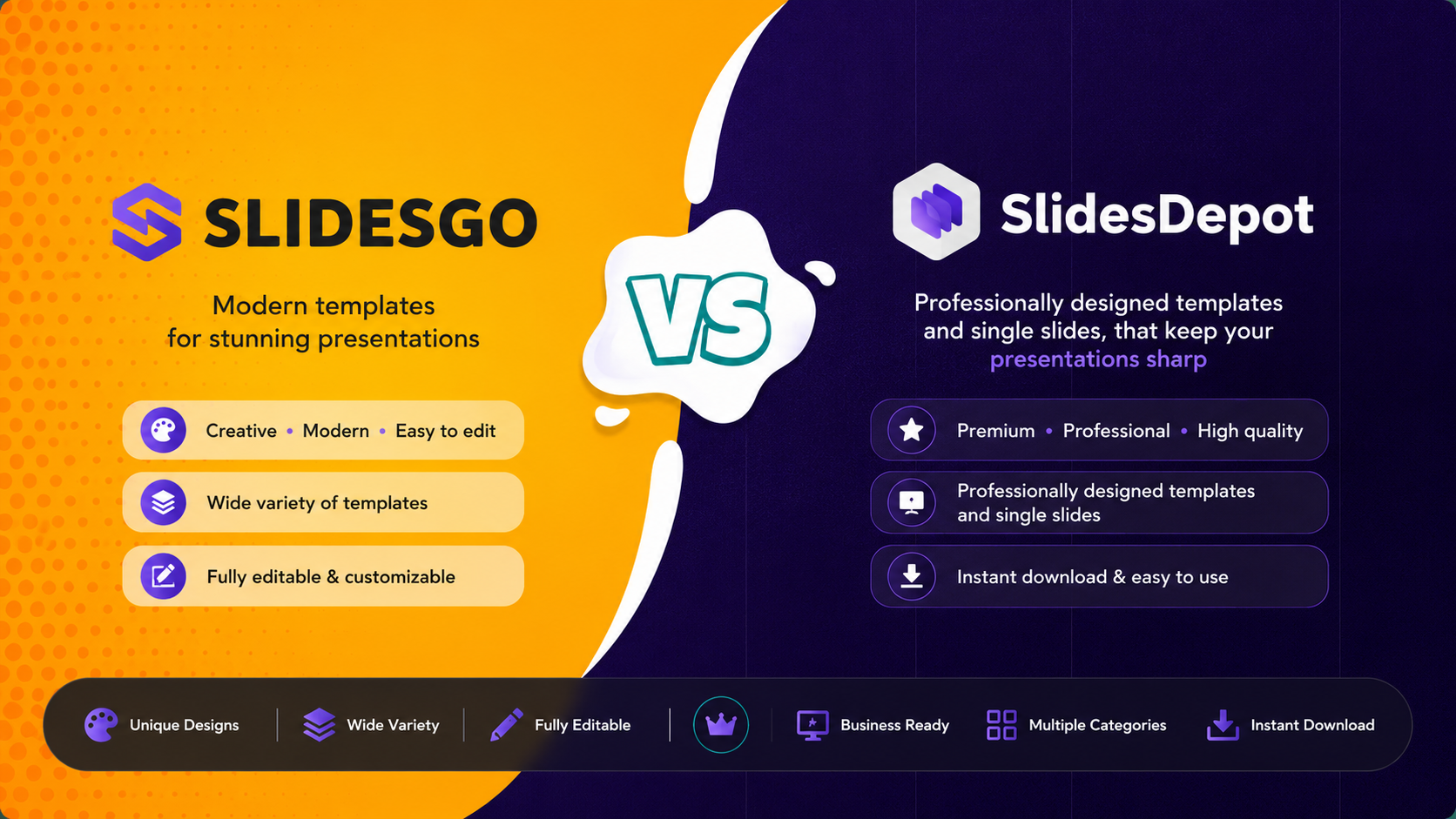
SlidesDepot vs Slidesgo: Which Template Library Fits Your Next Presentation?
If you’ve ever searched “free PowerPoint templates,” you know the real challenge isn’t finding a template. It is finding the right one without wasting time. Slidesgo and SlidesDepot both show up often in those searches, and both offer solid, editable templates for PowerPoint and Google Slides. They just approach templates in different ways. Slidesgo is…
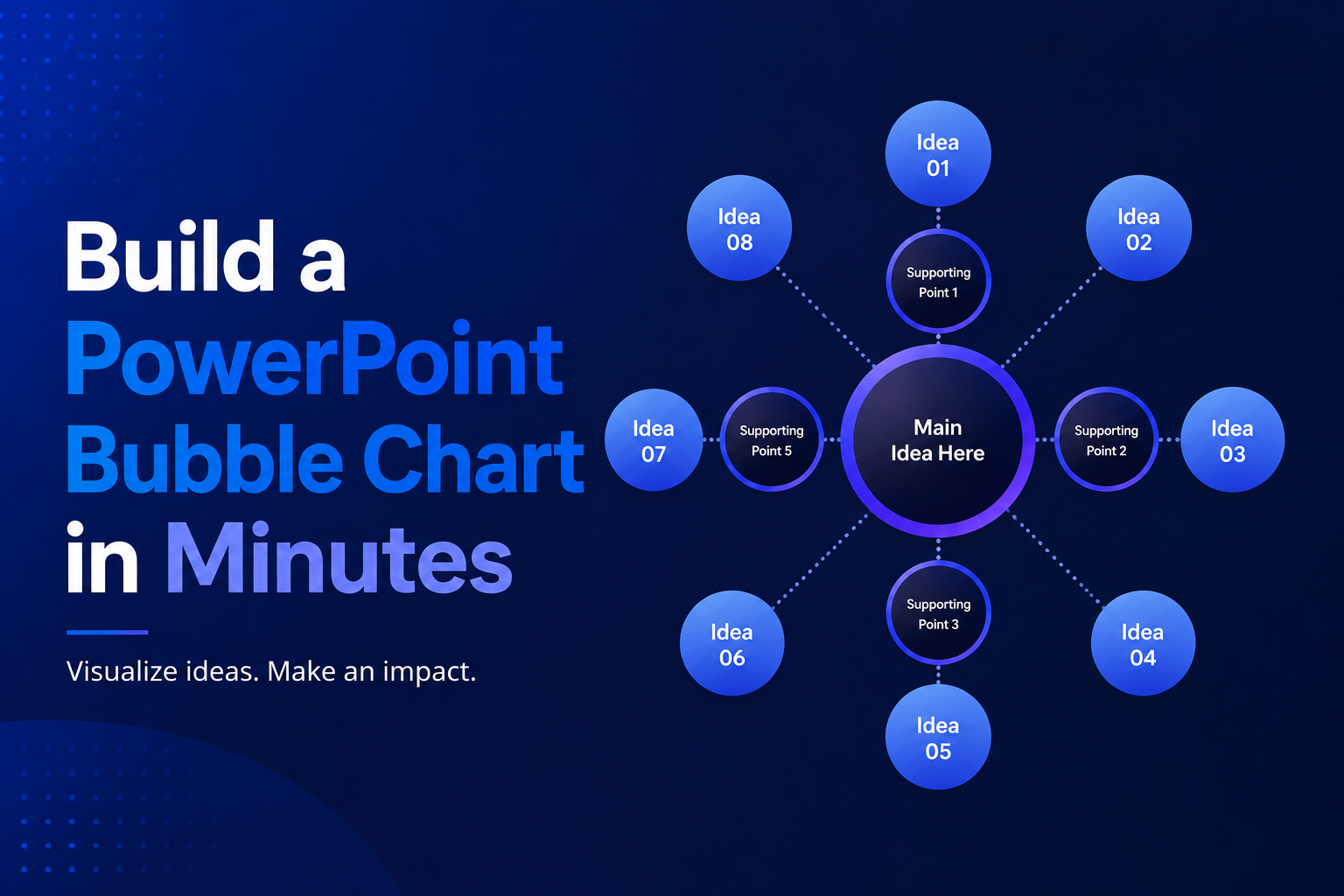
Build a PowerPoint Bubble Chart in Minutes
A bubble chart in PowerPoint is one of the most effective ways to show three variables in a single visual without cluttering your slide. At SlidesDepot, we build a lot of data driven templates, and bubble charts consistently come up as a request from users who need to compare performance, market position, or scale across…