

What Is the Purpose of Brainstorming During the Development of an Action Plan? 5 Strategic Benefits Explained



Every great result starts long before the first task is assigned or the first deadline is set. It begins with a single question, a blank whiteboard, and a team willing to voice ideas freely that’s where real planning starts: with brainstorming. Yet many teams skip this step, eager to jump straight into execution. That rush almost always costs them later.
So, what is the purpose of brainstorming during the development of an action plan? The short answer: it transforms vague ambition into a structured, realistic roadmap. The longer answer is the five strategic benefits explored below each one a reason why brainstorming deserves its place at the very beginning of your planning process.
Why Brainstorming Is the Foundation of Any Effective Action Plan
Understanding why brainstorming is important starts with recognizing what happens when you skip it. An action plan without brainstorming is like a house built without blueprints. You might make progress, but you’re making costly decisions without the context needed to make them well.
Brainstorming provides that context it surfaces assumptions, reveals constraints, generates options, and aligns stakeholders before any formal commitment is made. The planning stage is precisely when ideas are cheapest and easiest to change. Once resources are committed and work has begun, pivoting is expensive. Brainstorming is how you invest time upfront to save time, money, and morale later.
The 5 Strategic Benefits
1. Clarifying Objectives Before Committing Resources
The most common reason action plans fail isn’t poor execution — it’s pursuing the wrong goal. This is at the heart of what is the purpose of brainstorming during the development of an action plan: it forces your team to define success in concrete terms. What does “done” look like? What are the must-haves vs. the nice-to-haves?
When a team brainstorms around the goal itself — not just how to achieve it, but whether it’s correctly defined — they often discover the original objective was too broad, too narrow, or solving the wrong problem altogether. That discovery in a brainstorming session costs an hour. The same discovery mid-project can cost months.
2. Generating Diverse Ideas That Beat the Obvious Path
When left to individual judgment, teams default to familiar solutions — what worked last time, what feels safe, what is most visible. Brainstorming deliberately breaks this pattern. By creating an environment where all ideas are welcomed without immediate judgment, it opens the door to unconventional approaches that can save time, reduce cost, or dramatically improve outcomes.
This is why brainstorming is important for teams that want to move beyond predictable results. The best solution is rarely the first one that comes to mind — it’s usually the seventh or eighth, the one that surfaces only after the group has exhausted the obvious answers. Brainstorming techniques like round-robin ideation, silent brainwriting, and SCAMPER are specifically designed to push teams past that first comfortable layer of thinking and into genuinely creative territory.
3. Identifying Risks and Obstacles Before They Appear
One of the most underappreciated functions of brainstorming is risk discovery. When a diverse group of stakeholders discusses a plan openly, potential problems that no single person would have caught begin to surface. What could go wrong? What dependencies have we overlooked? What assumptions haven’t been verified?
A particularly effective brainstorming technique here is reverse brainstorming — asking “how could this plan fail?” rather than “how do we succeed?” This reframing reliably surfaces blind spots that forward-focused planning misses. A risk identified before the plan is written can be designed around. A risk identified after work has begun requires damage control. Brainstorming is the most cost-effective form of risk management available.
4. Strengthening Collaboration and Buy-In
People support what they help create. When team members participate in brainstorming, they feel genuine ownership over the resulting action plan — not just accountability for their tasks, but real investment in the outcome. This psychological shift from “I was assigned this” to “I helped design this” is a powerful driver of motivation, especially when challenges arise later.
This is a core part of why brainstorming is important that often gets overlooked. The buy-in effect extends beyond the immediate team — when brainstorming includes cross-functional stakeholders, the resulting plan benefits from broader input and faces less resistance during implementation. Brainstorming, done well, is team building with strategic output.
5. Improving Decision-Making with Broader Input
No single person in an organization has complete visibility. Brainstorming aggregates knowledge from across functions, experience levels, and perspectives — and that collective intelligence produces dramatically better decisions. When your action plan is informed by insights from operations, marketing, finance, and frontline team members alike, the decisions embedded in it are more robust, more realistic, and more likely to hold up under real-world conditions.
This is especially important for complex initiatives where the consequences of a wrong decision compound over time. Brainstorming ensures your plan reflects collective wisdom rather than individual assumption.
Pro Tip: Run Sessions That Actually Deliver
For brainstorming techniques to deliver real value, establish ground rules upfront: no idea is too wild, quantity over quality in early rounds, and evaluation comes after — never during — ideation. This separation between generative and evaluative thinking is what makes brainstorming genuinely useful rather than a polished performance of ideas already decided. Tools like mind mapping, affinity clustering, and dot voting help organize output into clear priorities once ideation wraps up.
Let me check the SlidesDepot website to find the most relevant templates for this blog.Now let me check the specific template pages to get accurate titles and descriptions:I now have enough information from the site. Let me also quickly check the strategy and plan template pages since those are relevant:I have everything I need. Here is the fully expanded section with all templates linked:
From Ideas to Execution: Connecting Brainstorming to Your Action Plan
Brainstorming without structured follow-through is just a conversation. The real value is unlocked when your session’s output gets organized, evaluated, and translated into a working plan that people can actually execute against. That transition — from whiteboard energy to a structured, accountable roadmap — is where most teams lose momentum. The right templates make sure that doesn’t happen.
SlidesDepot offers a complete collection of professionally designed PowerPoint and Google Slides templates built specifically for teams that take planning seriously. Whether you’re coming out of your first brainstorm or preparing to present a finalized strategy to leadership, there’s a template designed for exactly that stage of the process. Here are the five that matter most when moving from brainstorming to execution.
1. Mind Map Template — Organize Your Brainstorm Output Instantly
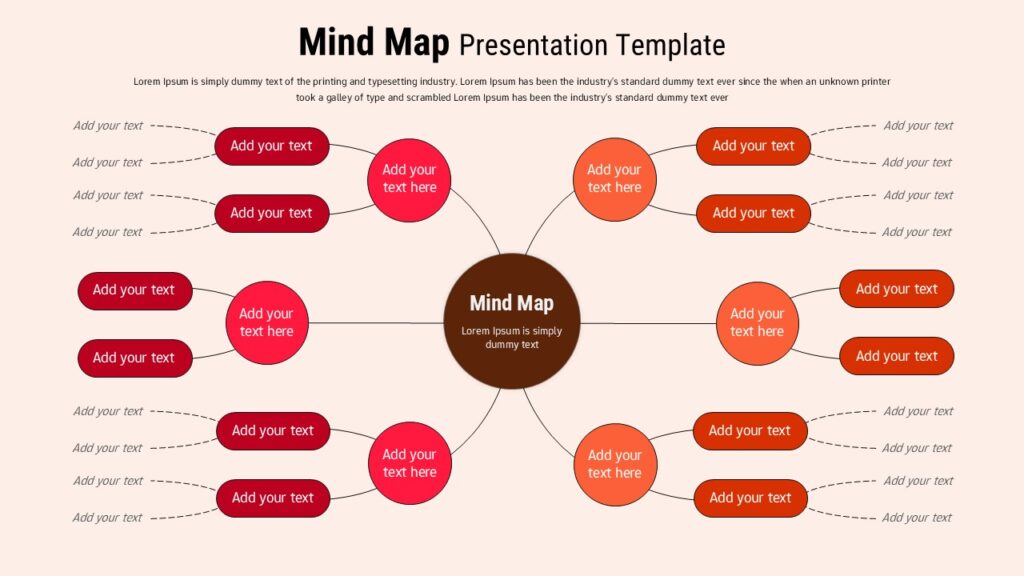
The first thing to do after a brainstorming session ends is capture the structure before the energy fades. A mind map is the ideal tool for this. It lets you visually cluster related ideas, identify which themes carry the most weight, and surface the connections between concepts that wouldn’t be obvious in a flat list.
SlidesDepot’s Creative Mind Map Diagram Template gives you a clean, visually compelling structure to organize your brainstorm output immediately after the session. Rather than staring at a disorganized wall of sticky notes, you walk away with a clear visual map of your ideas — ready to be prioritized and acted on.
2. Strategic Mind Map Framework — Align Thinking Around a Central Goal
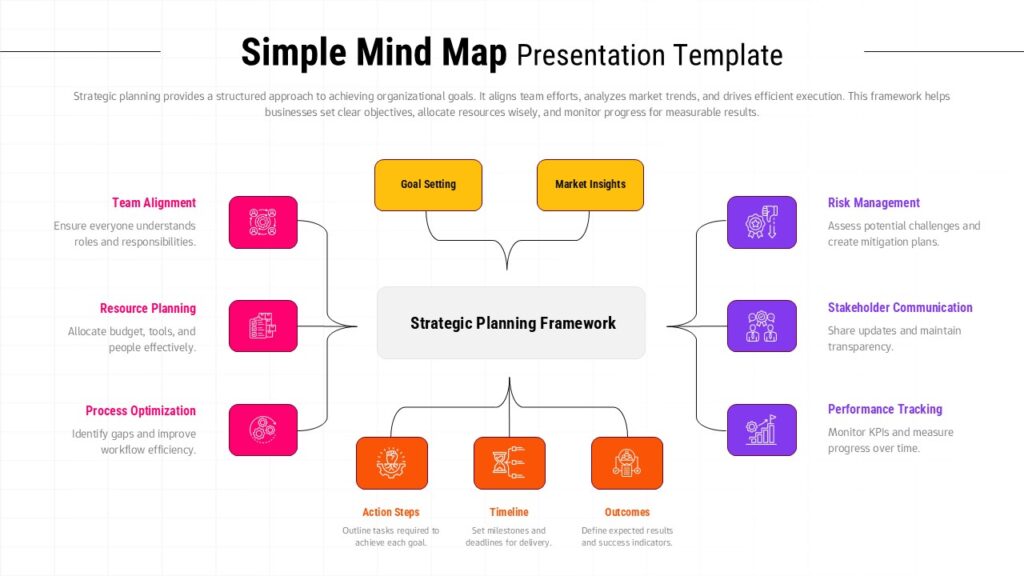
Once your ideas are clustered, you need to connect them back to your strategic objective. This is where a more structured mind map framework becomes valuable — one designed not just to capture ideas, but to organize them around a central strategic question or goal.
The Strategic Mind Map Framework Template from SlidesDepot is built for exactly this purpose. It helps teams move from scattered brainstorm output to a coherent strategic picture, with each idea branch clearly tied to an overarching priority. This is the bridge between raw ideation and structured planning.
3. SWOT Analysis Template — Pressure-Test Your Best Ideas
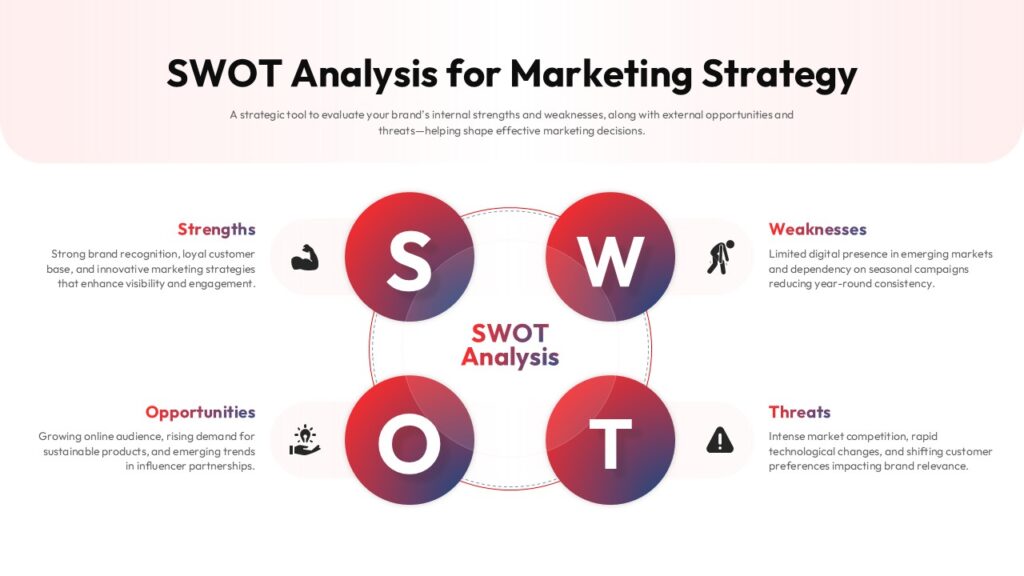
With your ideas organized, the next step is to evaluate them honestly. Not every idea that survives a brainstorming session deserves a place in your action plan — and the SWOT Analysis framework is one of the most reliable tools for separating strong candidates from weak ones.
SlidesDepot’s SWOT Analysis Templates collection gives you multiple professionally designed layouts to assess the Strengths, Weaknesses, Opportunities, and Threats associated with your top ideas. This step grounds your brainstorm output in operational reality, ensuring you move forward with ideas that will actually hold up given your resources, constraints, and competitive environment — not just ideas that sounded exciting in the room.
4. Project Planning Timeline & Roadmap Template — Build the Execution Blueprint
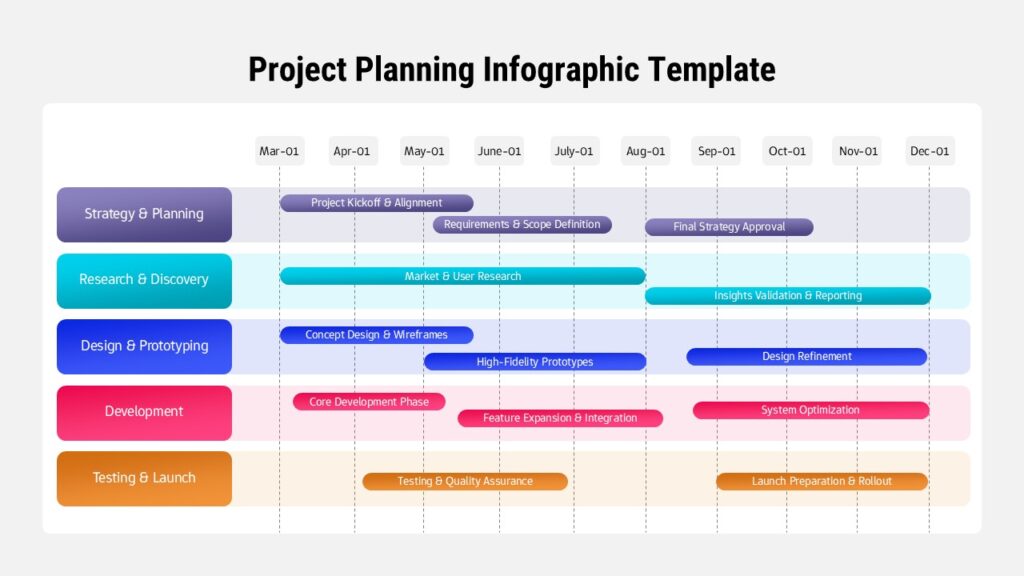
Once you know what you’re doing and why, it’s time to map out how. For any initiative involving multiple teams, sequential dependencies, or extended timelines, a project planning template is essential. It converts your validated ideas into a structured sequence of tasks, milestones, owners, and deadlines — the actual mechanics of execution.
The Project Planning Timeline Roadmap Template from SlidesDepot handles this stage with clarity and visual precision. It gives every team member a shared view of what needs to happen, in what order, and by when — eliminating the ambiguity that causes projects to stall or miss critical dependencies.
5. Plan Templates Collection — Assign Ownership and Drive Accountability
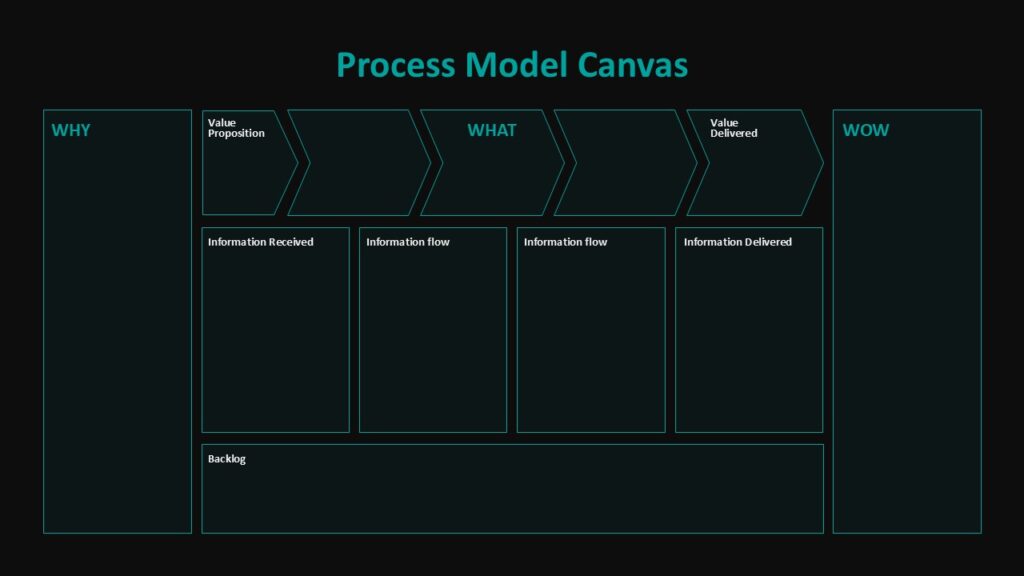
For teams that need a straightforward, execution-ready format to assign tasks, set deadlines, and track deliverables, SlidesDepot’s broader Plan Templates collection offers a range of structured layouts designed to turn strategic intent into individual accountability. This is where brainstorming output stops being conceptual and becomes someone’s responsibility — which is ultimately the point of the entire planning process.
Together, these five templates form a complete pipeline from raw idea to organized execution. Each one serves a distinct stage: capturing your brainstorm output, aligning it to your strategic goals, evaluating it rigorously, building the execution roadmap, and assigning clear ownership. Skip any stage and you leave value on the table. Move through all five and you arrive at launch day with a plan that has been genuinely thought through not just written down.
Explore the full template library at SlidesDepot and find the right starting point for wherever your team is in the planning process.
Brainstorming Is Where Winning Plans Begin
What is the purpose of brainstorming during the development of an action plan? It clarifies your goals, generates better ideas, surfaces risks before they become crises, builds buy-in that sustains momentum, and produces the diverse input that leads to smarter decisions.
Most importantly, it ensures that by the time you sit down to write your action plan, you’re not guessing you’re building on a solid foundation of shared understanding, evaluated options, and strategic intent. The plan that follows will be sharper, more realistic, and more likely to succeed because of it.
Your next action plan deserves the right starting point. Brainstorming is it and SlidesDepot has the templates to carry it all the way through to execution.
What is the purpose of brainstorming during the development of an action plan?
Brainstorming clarifies objectives, generates diverse ideas, surfaces risks early, builds team buy-in, and improves decision-making through collective input — ensuring the plan that follows is grounded in shared understanding rather than individual assumption.
Why is brainstorming important even for experienced teams?
Experienced teams are often more prone to defaulting to familiar solutions. Brainstorming creates the structured space to challenge those defaults and ensure experience is applied thoughtfully rather than reflexively.
What brainstorming techniques work best for action planning?
Mind mapping, reverse brainstorming, SCAMPER, round-robin ideation, and affinity clustering are among the most effective — each designed to push teams past obvious answers and surface stronger, more creative solutions.

SlidesCarnival vs. SlidesDepot : Which Presentation Platform Is Right for You?
Discover Free PowerPoint Templates That Go Beyond SlidesCarnival SlidesCarnival is widely known for its free presentation designs for both PowerPoint and Google Slides. Many users search for SlidesCarnival PowerPoint templates or Google SlideCarnival themes because SlideCarnival offers simple, colorful, and easy-to-use layouts. These qualities make the brand especially popular among students, educators, and casual presenters who need quick, ready-made slides. As presentation needs become…
How to Make a Bullet Point on Google Slides (Step-by-Step Guide for Beginners)
If you’re searching for how to make a bullet point on Google Slides, you’re likely trying to organize your presentation in a clearer and more professional way. Bullet points are essential for structuring information, improving readability, and keeping your audience focused. Instead of overwhelming viewers with long paragraphs, bullet points allow you to highlight key…
How to Make Google Slides Vertical (Portrait Mode) – Step-by-Step Guide
Google Slides is one of the most popular presentation tools in the world, but it has one quirk that trips up a lot of users: it defaults to landscape (horizontal) mode. If you’ve ever tried to create a poster, resume, infographic, social media graphic, or flyer in Google Slides and felt frustrated by the horizontal layout, you’re not alone. The…